User Research, Information Architecture, Wireframe, Adobe xd

User Research, Information Architecture, Wireframe, Adobe xd

Hannah Riley
UX & Product Designer

Hannah Riley
Designer & Illustrator
Water Warriors
Water cycle
& water conservation animation
Graphics & animation
Project duration: 2 weeks
2020
Project Overview
In my Climate Crisis & Design class, I created an animation teaching the water cycle and how it relates to water conservation. This animation is a part of the Water Warriors curriculum outline designed for grades 1-3 to bridge the gap between these abstract concepts and processes by teaching how the water cycle works and later breaking it down to understand water conservation. Furthermore, to forster an understanding of the importance of water and its integral role in supporting life and shaping our planet.
Personal connection to the project
Australia is a dry country that has faced water availability problems for many years, and as a result, many people in Australia have a water-conscious mindset. People think about how much water is used in the household to implementing grey water systems.
In 2019 Australia had catastrophic wildfires that scorched millions of hectares and killed or displaced an estimated 3 billion animals. With raging fires there was a sharper decline in water availability, therefore we were always conscious of how to reduce and conserve water. After spending time in Australia and going back to the East Coast in the U.S., it was shocking to me how different behavior is towards conserving water.
Growing up with this water-conscious mindset and learning about climate change has increased my interest in water conservation. Over the past two years, I have taken classes on water pollution and water conservation, which has inspired me to design a curriculum outline and animation around learning about water conservation.
This project is short as it was created in my Climate Crisis and Design, however, I hope to further develop this curriculum in the future.


Water Warriors

This curriculum is designed for grades 1-3 to foster an understanding of the importance of water and its integral role in supporting life and shaping our planet. Materials for each day will build on the previous days learning by offering a variety of activities that involve creativity, writing, field exploration, and hands-on activities. This curriculum can be completed by a child independently from home or with the help of an adult caregiver.
Throughout this curriculum, children will do a series of water conservation challenges and will also develop their own long-term goal and plan to implement water conservative habits into their daily lives.

Curriculum breakdown
Water Supply
Drinking Water
Smart Gardener
Water Around the World
Stewardship

Combination of digital interface to learn content and hands on activities to transfer that knowledge.

Day 1
Learn about the water cycle and journey + activity
Identify water at home
Water warrior challenge
Day 2
Why its important to conserve water
Where do we get our drinking water from?
Water warrior challenge
Day 3
Learn and Identify wasteful gardening methods
Learn how to conserve water in your garden
Water warrior challenge
Day 4
Learning about access to water around the globe
Learning about the weight for water + activity
Water warrior challenge
Day 5
Learning about stewardship and conservation
Creating your long term plan and creating ways to help maintain this habit
Curriculum breakdown
Water Warrior
challenges
Build
Vocabulary
Long term
goal/plan
Series of challenges to help children get into the mindset and experience what it means to conserve water
Provide materials and tools to help create this plan
Example Activities
After lessons, which are a combination of using storytelling and animation children then engage in hands-on activities. These activities are important because they provide more context and real-life application of lessons.


For example, after learning about the water cycle children can use physical materials to visually see parts of the water cycle occur such as evaporation.

An example interaction with the digital interface


orange
After children explore their home identifying water usage and making guesses they then go over the actual facts. This information is shown through diagrams that ideally would be animated and have sounds to be engaging for the user.


An example Water Warrior Challenge
-
Short showers
-
Interview an adult about climate change
-
Teach a neighbour about their garden habits
-
5 gallon challenge
-
Create a list of goals on how you will work to save water

Intervention
Throughout my research of various school curricula to other online curricula and activities around water, I noticed that there were consistently lessons strictly focused on the water cycle and lessons focused on water conservation. These topics were always separated, and it made me take a step back for a second and think, wait why do we need to conserve water if water is going in a cycle?
So I reached out to my previous professor Bonnie Epstein, a lecturer at RISD who teaches Water Pollution, Global Water Crisis, and Environmental Disasters and Design Solutions. She explained to me how these two processes are linked and discussed how this gap in water conservation education is something she has also noticed.
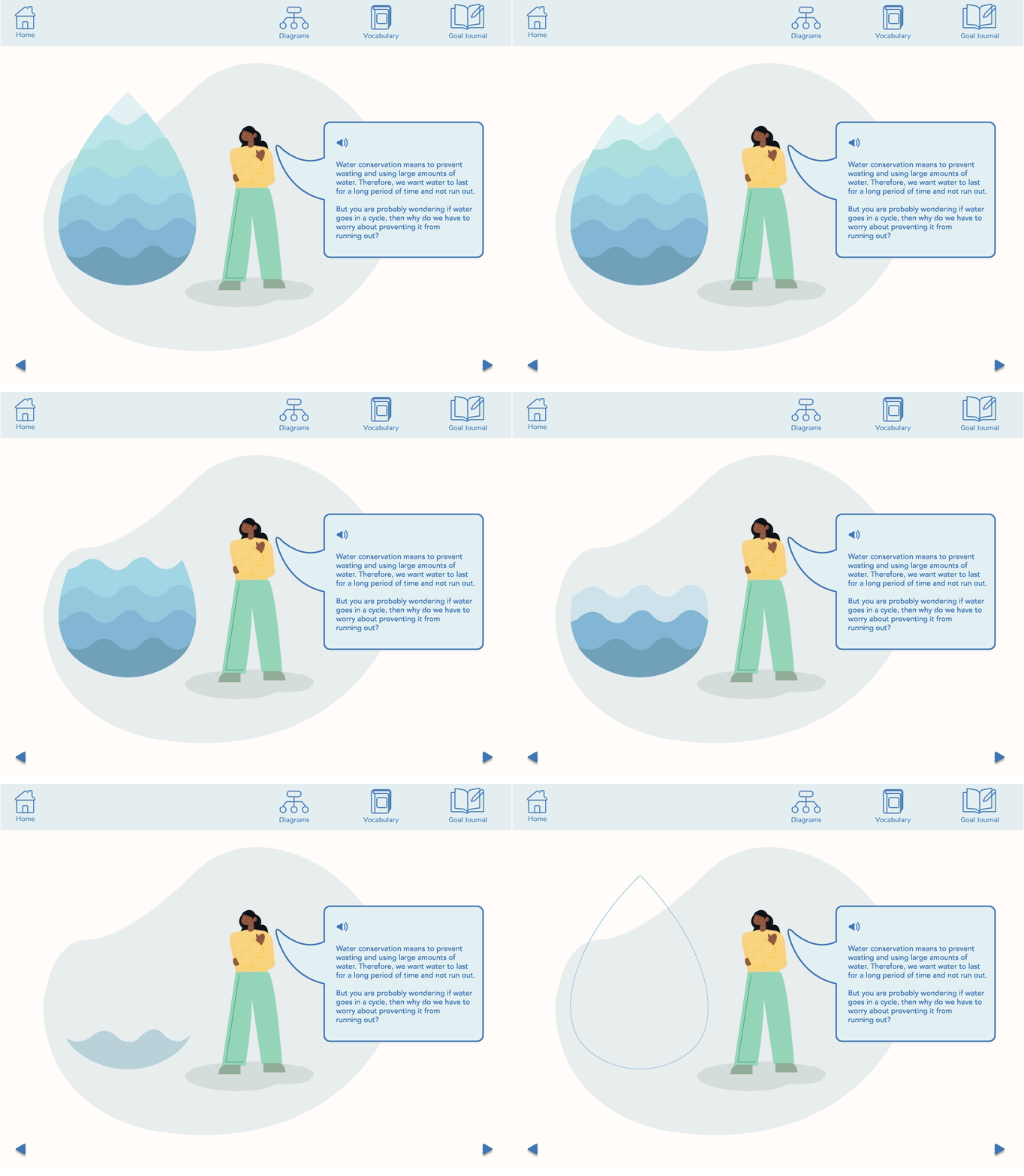
Water cycle and water conservation animation
Around the age of 7 children begin to learn about the water cycle, and later begin to learn about water pollution and conservation.
However, there is a gap between these two abstract processes, why do we need to conserve water if it goes in a cycle?
This animation is a part of a curriculum designed for grades 1-3 to bridge the gap between these abstract concepts and processes by teaching how the water cycle works and later breaking it down to understand water conservation. Furthermore, to Forster an understanding of the importance of water and its an integral role in supporting life and shaping our planet.

Next steps & reflection
This project was done in a short time span, however, in the future, I would love to revisit it and expand on this initial idea and actually develop a full curriculum with content. To improve the animation itself I would conduct user testing with children of the appropriate age to see if it's comprehendible and improve story-telling to visuals. Furthermore, as this project was my first time doing animation my skills have developed since and therefore would improve the technical aspects of the animation.
The most important point to note is that this curriculum was originally designed for children who are living in a western country where they do not face water shortage challenges (East Coast). Although everyone should learn about the water cycle, it should be taught in a way that is appropriate to the environmental context of the child. For example, based on my experience in Ghana many children are familiar with water conservation, and even their relationship to methods of conserving water are highly divergent from other countries that face drought such as Australia. Therefore, as this curriculum moves forward it should be clear in whom it's designed for or have various versions to be appropriate to divergent cultures and geographical regions.